Dance, café or circus: which Degas should you choose?
The subject alone does not set the mood. Look at the position of the figures, the lines of the setting and the dominant colours to choose the scene you want at home.
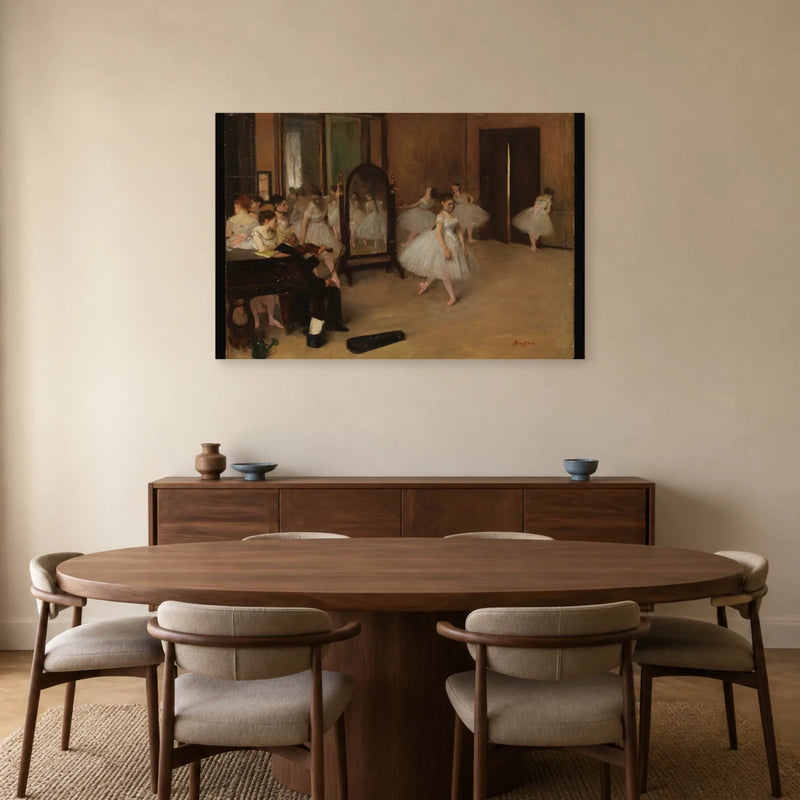
The Dance Class: gestures of rehearsal
The dancers are spread around the room, some practising and others waiting. Pale costumes stand out against a brown-toned setting. This horizontal scene invites you to follow several figures; in a living room, enough viewing distance lets you take in the whole scene before returning to its details.
View this canvas print ↗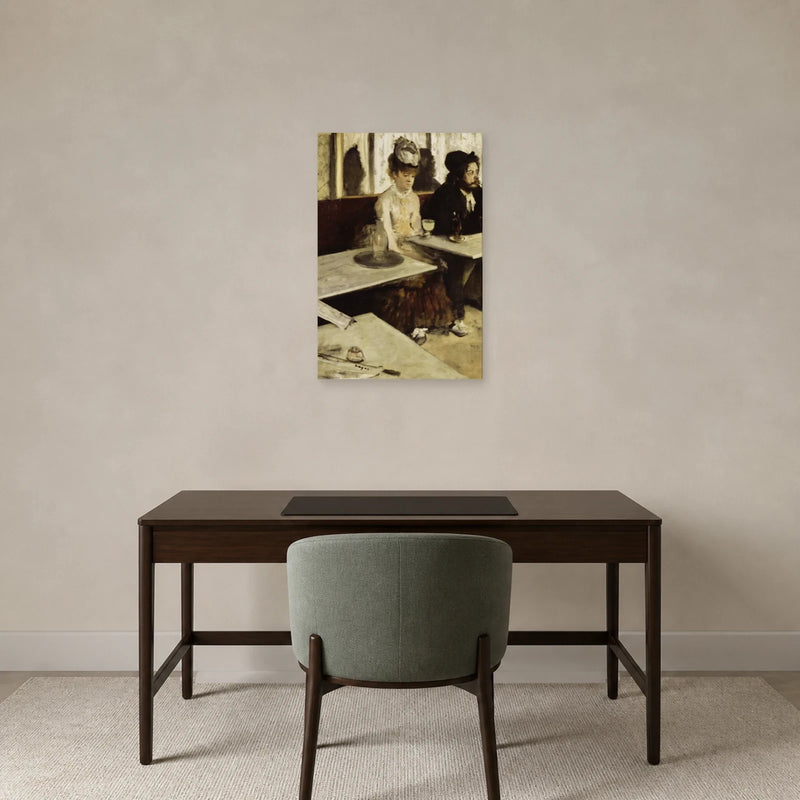
L’Absinthe: a quiet café scene
Two figures occupy a space shaped by tables and diagonal lines. The muted palette and their poses give this work a quieter presence than the ballet scenes. This vertical print can suit a study or reading corner where its nuances remain visible.
View this canvas print ↗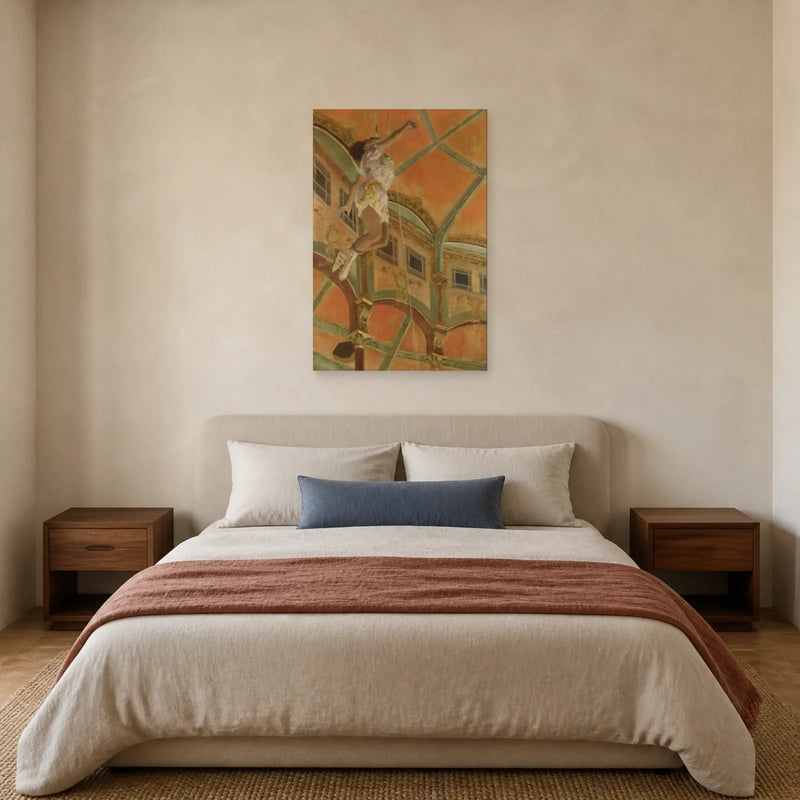
Miss La La: looking upwards
The acrobat and the circus architecture lead the eye upwards through a vertical composition. Ochres and greens create an unusual view of a performance. The motif suits a tall wall; take time to find the figure within the structure.
View this canvas print ↗Beyond the ballerina
The selection extends beyond dancers to horse racing, a woman at work, people in a café and a circus scene. When choosing, distinguish the subject from the energy of the image. A rehearsal can show waiting as well as movement; a café scene may be structured by strong diagonals. This variety lets you find a Degas without making your room entirely about dance.
Reading the framing and the space
In Degas’s work, the figures are not always centred. Floors, furniture and architecture help shape the scene. Look at the open areas and direction of the lines before deciding on a size. A detailed composition reads differently close up and from the sofa. If you enjoy exploring an image, leave enough distance to see the whole while keeping the canvas accessible for a closer look.
Matching the scene’s colours to the room
The browns, muted greens and pale clothing in these examples work well with natural wood or a cream wall. But Degas should not be reduced to a single powdery palette: compare the chosen work, especially its darker areas. A small ochre accent in a textile can echo the circus setting, while a plain backdrop helps the costumes in a dance scene stand out.
The canvas print you receive
The image is reproduced as a print on canvas. Any brushstroke or texture effect visible in the image is part of the printed design.
The textured canvas has a matte finish and is stretched over a wooden stretcher frame. The edges are printed and hanging hardware is included. The stretcher supports the canvas; it is different from an outer decorative frame.
The estimated delivery date appears on each product page. For details, see our shipping policy and our returns policy.
Your questions about this collection
Can I choose a Degas subject other than a dancer?
Yes. The selection includes L’Absinthe, Miss La La at the Cirque Fernando and At the Races in the Countryside. Compare the works shown to choose a café scene, a performance or an equestrian subject.
Are these original pastels?
No. They are reproductions printed on canvas. The technique of the historical artwork and the material of the product for sale are different: the drawn or painted effects belong to the reproduced image.
Which Degas work suits a music room?
The Dance Class and Musicians in the Orchestra approach performance from different viewpoints. Compare their figures, orientation and contrasts with your space. The subject can suggest music without requiring an entirely themed room.