Which Cubist composition should you choose?
Objects, faces and flowers offer different ways to explore facets. These examples distinguish a Juan Gris reproduction from contemporary decorative compositions.
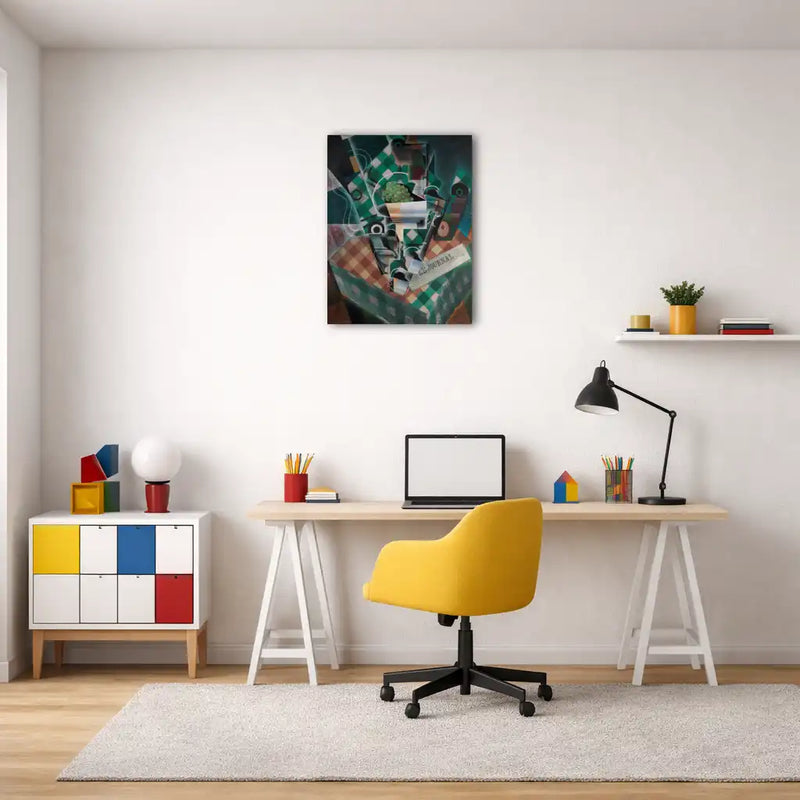
Juan Gris: a faceted still life
The Checkered Tablecloth layers objects and planes in greens and browns. This reproduction introduces an artist associated with Cubism. Its dense pattern benefits from open wall space and quiet textiles.
View this canvas print ↗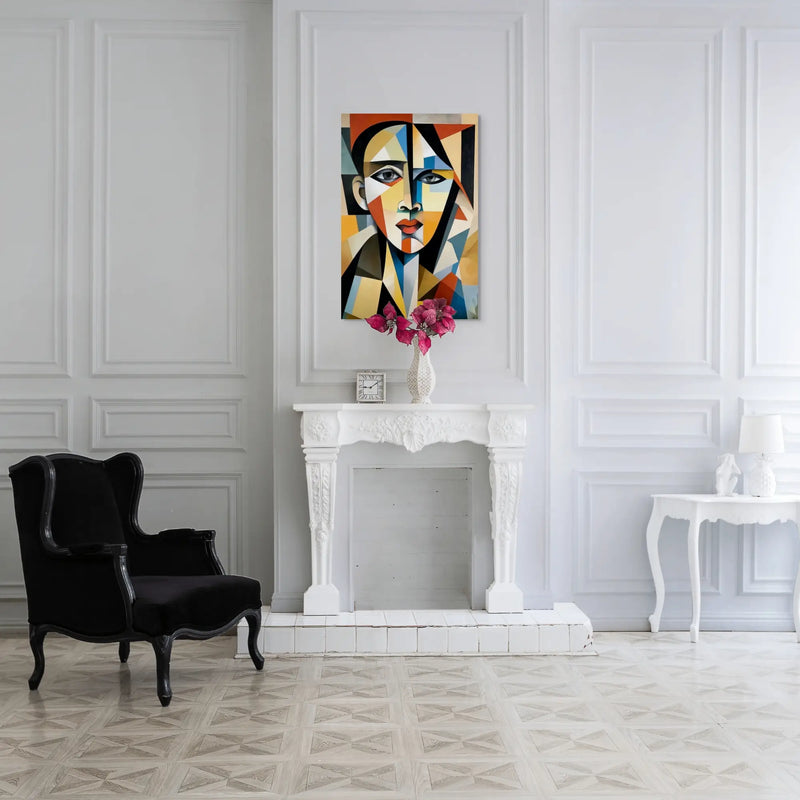
Woman’s portrait: graphic planes
The face is divided into angular areas of light, dark and colour. This contemporary Cubist-inspired design remains immediately recognisable. The vertical format can suit an armchair or entryway.
View this canvas print ↗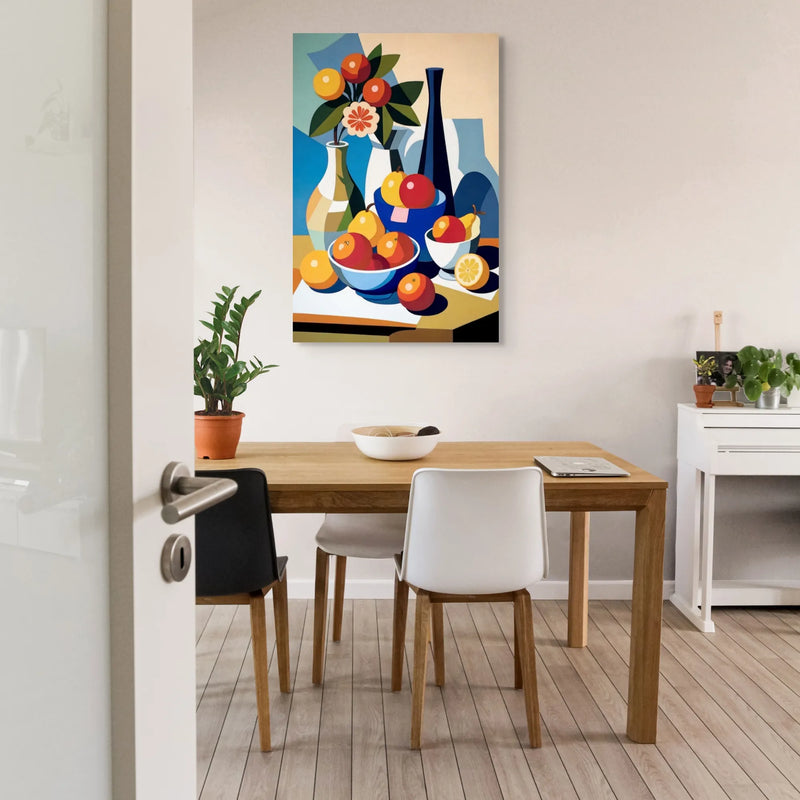
Geometric bouquet: objects and bright colour
Flowers, fruit and bottles meet in a still life with distinct outlines. Yellow, red and blue give the modern composition a lively presence near a dining area or in a living room.
View this canvas print ↗How a Cubist image is constructed
Cubism questions a single viewpoint: objects can be broken into planes and recomposed. In a still life, follow the contours of a table or bottle; in a portrait, see how parts of the face connect. One geometric shape alone does not make an artwork part of the historical movement.
Historical artist or decorative inspiration?
The grid includes reproductions attributed to artists such as Juan Gris and newer designs using a faceted visual language. A contemporary Cubist-inspired image is not thereby a Picasso or Braque original. Check each product title and attribution.
Choose density and contrast
Layered planes invite a close look; a portrait with clear colour areas reads faster in a passage. Compare dominant tones and leave some wall around the print. Collage and brush effects are part of the printed image, not attached pieces or hand-painted texture.
The canvas print you receive
The image is reproduced as a print on canvas. Any brushstroke or texture effect visible in the image is part of the printed design.
The textured canvas has a matte finish and is stretched over a wooden stretcher frame. The edges are printed and hanging hardware is included. The stretcher supports the canvas; it is different from an outer decorative frame.
The estimated delivery date appears on each product page. For details, see our shipping policy and our returns policy.
Your questions about this collection
Is a Cubist picture necessarily abstract?
No. A portrait or still life may keep a recognisable subject while rebuilding it in facets. If you want no identifiable figure, assess the individual composition rather than the label alone.
Are these prints collages or hand-painted canvases?
No. These products are printed on canvas. Apparent collage, brushwork and material texture are part of the image. Check each product’s specifications for support and finish.
How can I pair two Cubist-inspired prints?
Choose one connection, such as colour or subject, and compare their visual density. Two busy designs need breathing room. Keep their attributions clear: a decorative pair is not a historical series by one artist.