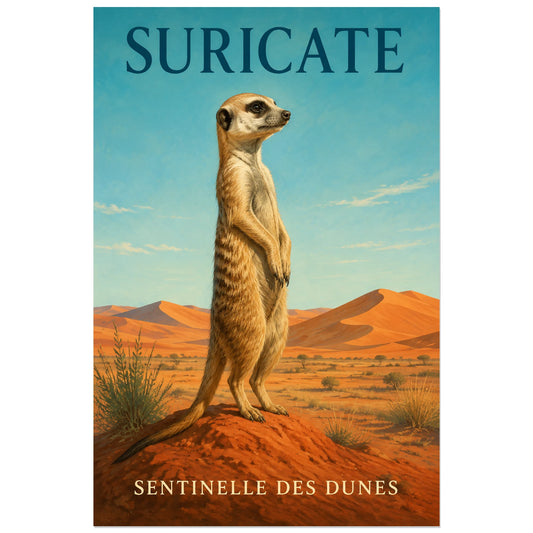
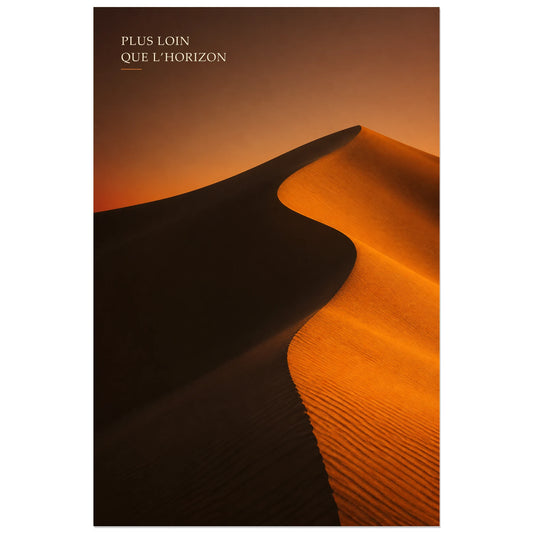
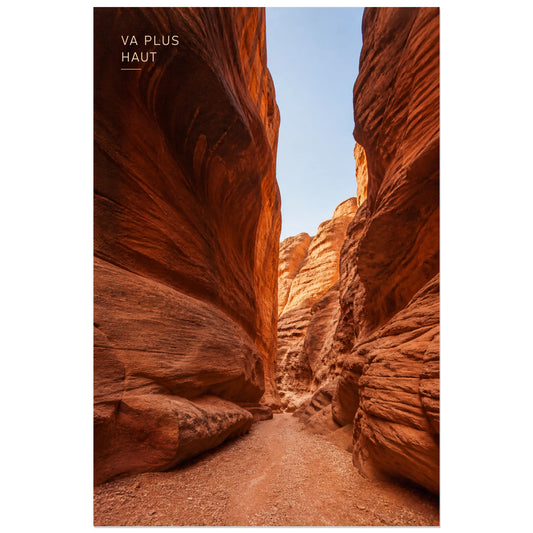
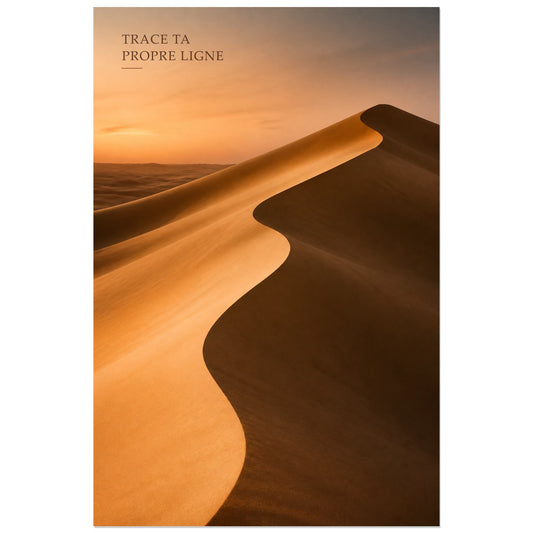
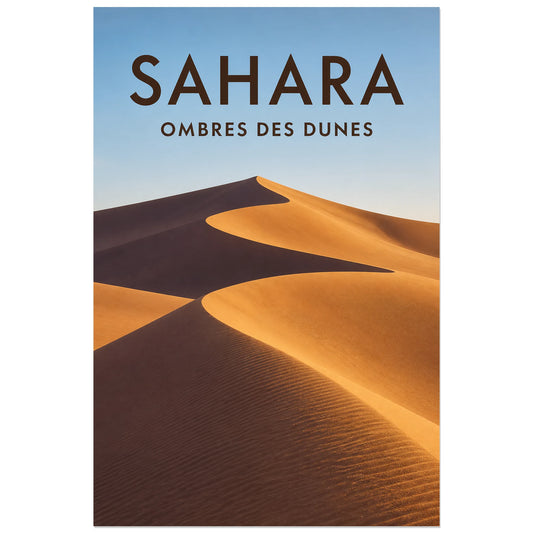
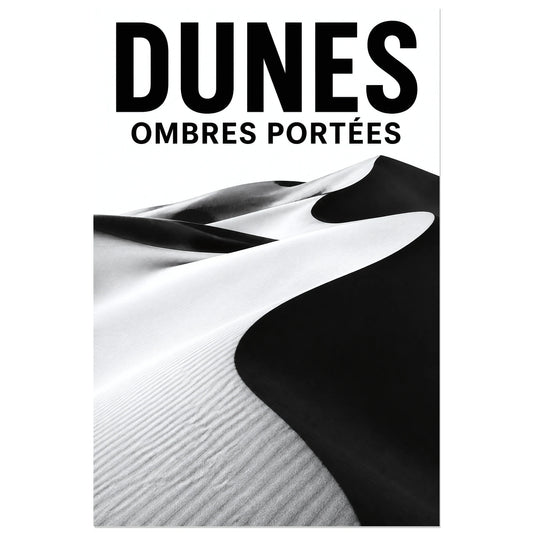
The desert reduces the landscape to light, wind and the curves of the ground. Dunes, rocky plateaux, oases and salt flats create pared-back compositions in which every shadow becomes an essential line.
A landscape reduced to light, wind and line
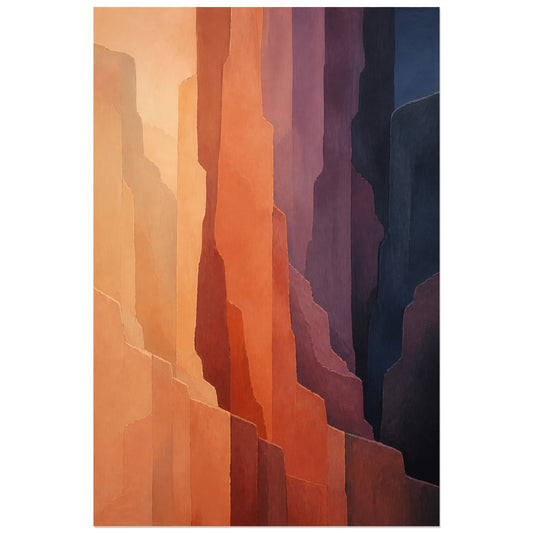
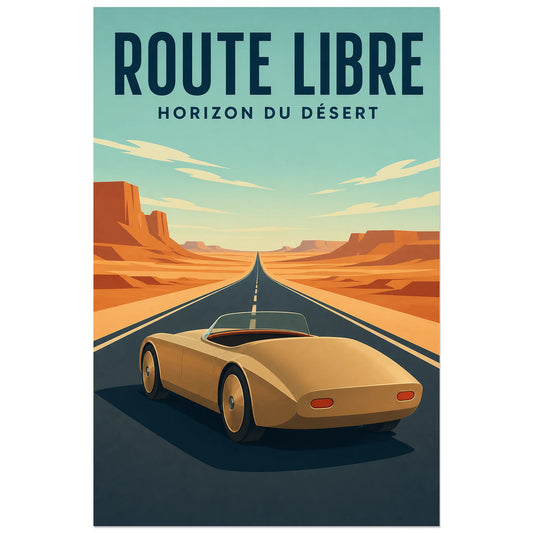
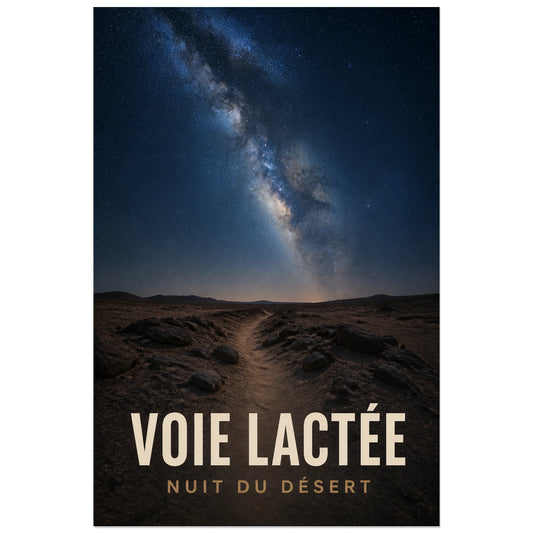
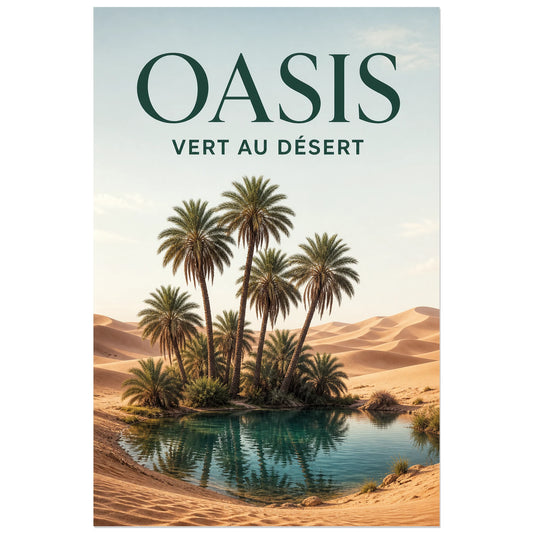
The visual field becomes richer when it brings together dunes, rocky plateaux, canyons, oases, tracks and distant silhouettes. Sand, ochre, pink, copper and midnight blue create very different moods, from morning stillness to the almost abstract heat of midday. The treatment is not intended to standardise the subject, but to reveal the sensation that makes it recognisable.
A desert is identified less by a country than by the scarcity of its elements and the importance given to empty space, unlike general landscape imagery. This distinction matters as much for a decorative choice as for understanding different visual sensibilities.
Bringing a mineral palette into the interior
This restraint is particularly suited to contemporary interiors and natural palettes. A large dune brings calm and movement above a low cabinet; a more contrasting mineral horizon gives a study character. Ochres are not the only option: evening pink, midnight blue or salt white make it possible to explore very different atmospheres without losing the sense of space. A few traces of wind or footsteps can suggest a discreet story.
When choosing an image around the desert theme, comparing a light interpretation with a more contrasting version helps to gauge its real presence. The right option should remain legible from the main route through the room without losing all its interest at close range.
A dune curve softens the lines of a living room; a vertical canyon strengthens an entrance hall. Earth tones work with wood and linen, while a blue or violet shadow keeps the whole from becoming uniformly beige. A clear, personal intention is preferable to an arrangement created only to follow a passing decorative trend.