

Gustav Klimt: Symbolism and Art Nouveau
Gustav Klimt is instantly recognisable, yet easy to simplify. Gold, elongated bodies and dense pattern are only the surface of an artist who moved from prestigious public commissions to the radical programme of the Vienna Secession. His paintings keep the human figure legible while allowing ornament to dissolve depth, clothing and setting. That tension—between intimacy and display, flesh and precious surface—makes Klimt essential to the story of modern art and still useful when choosing art for a contemporary room.
 A selection built around gold, ornament and Klimt-inspired figures.
Gustav Klimt wall art and reproductions
Gold, bodies and modern Vienna: understanding Gustav Klimt
Loading the quiz…
From academic painter to a language of his own

Born near Vienna in 1862, Klimt trained at the School of Arts and Crafts and first succeeded as part of a team decorating theatres and public buildings. The controversy surrounding the Faculty Paintings for the University of Vienna marked a decisive break with official expectations. In the mature work, drawing remains exact, but bodies enter fields of gold, colour and repeated signs. This is not abstraction in the later, non-figurative sense; it is a controlled weakening of spatial depth. To place Klimt within modern art, look at how he lets the painted surface announce itself instead of pretending to be a transparent window. The shift also changes the viewer’s role: instead of entering a convincing room, we scan a deliberately constructed surface and move between likeness, symbol and decoration.
The Vienna Secession: freedom, exhibition and total design

In 1897, Klimt and other artists founded the Vienna Secession and he became its first president. The group was not defined by one style. It sought independence from conservative exhibition structures and brought painting, architecture, graphic design and the applied arts into dialogue. Klimt’s decorative unity belongs to that broader ambition. Pattern is not a frame added after the fact: it organises the entire encounter with the picture, from the rhythm of a garment to the flatness of a background. The Secession building, its exhibitions and its journal also turned presentation into an artistic question: how a work is framed, sequenced and encountered matters alongside what it depicts.
Portraits, desire and the politics of looking
That combination of allure, control and unease becomes especially sharp in Klimt’s Judith II. The hands, vertical crop and marginalised head of Holofernes complicate the familiar “femme fatale” label.
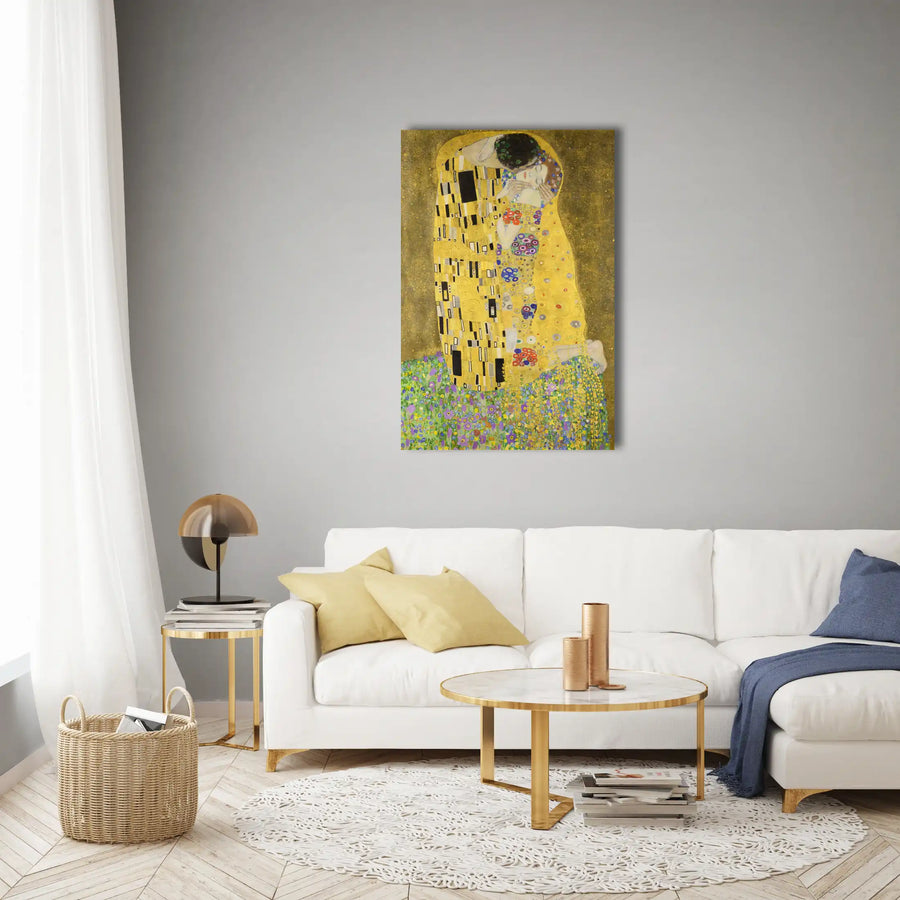
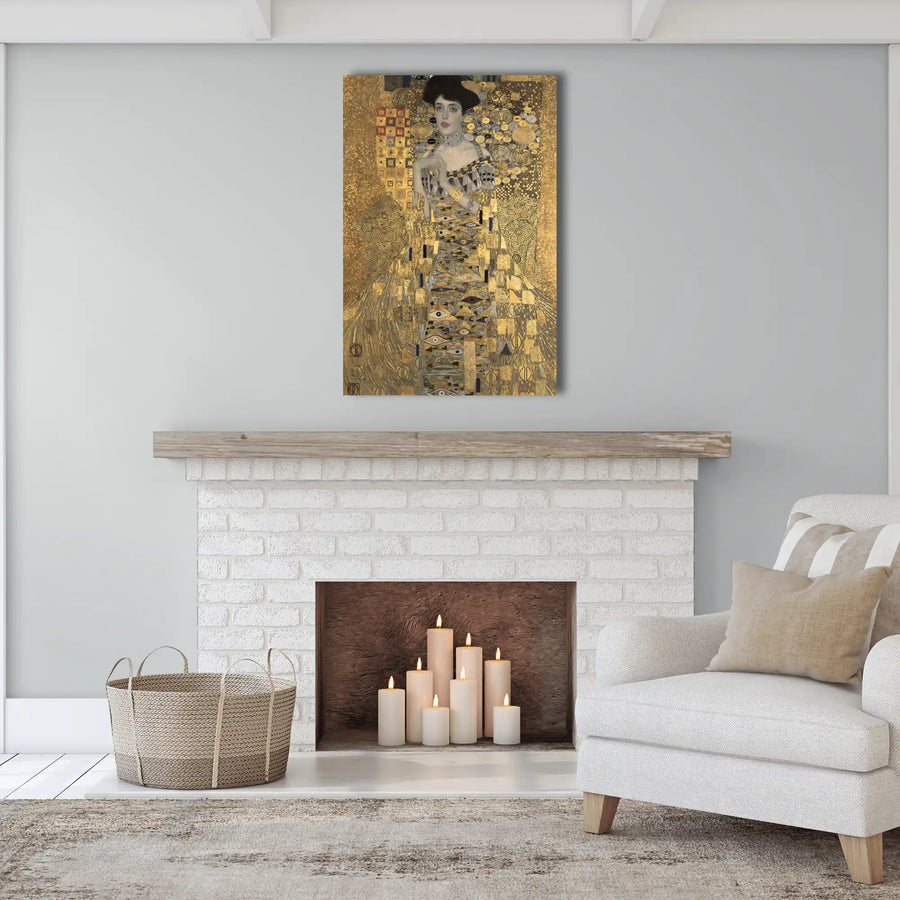
Klimt’s portraits often present women from Vienna’s cultivated bourgeois circles, but they do more than record appearance. In Portrait of Adele Bloch-Bauer I, face and hands remain bodily anchors while the dress and setting merge into a metallic field. In The Kiss, two bodies become nearly inseparable from their patterned robes. These works invite admiration, yet they also make the act of looking visible: the viewer is not asked to admire a type called “woman”, but to notice how identity, status and desire are staged. Pose, jewellery and textile-like pattern indicate social presence, while exposed hands and faces resist being absorbed completely into the decorative scheme.

The Beethoven Frieze: a search for happiness
Created for the Fourteenth Secession Exhibition in 1902, the Beethoven Frieze develops an allegorical passage from human vulnerability through hostile forces towards a moment of fulfilment. It responds to Beethoven’s Ninth Symphony and to the exhibition’s idea of a synthesis of the arts. Plaster, casein paint, gilt, mirror fragments and other materials make the wall itself part of the work. Its impact comes from sequence and scale: figures are read while moving through space, not as a single isolated canvas.
Projected Klimt and the difference between image and artwork

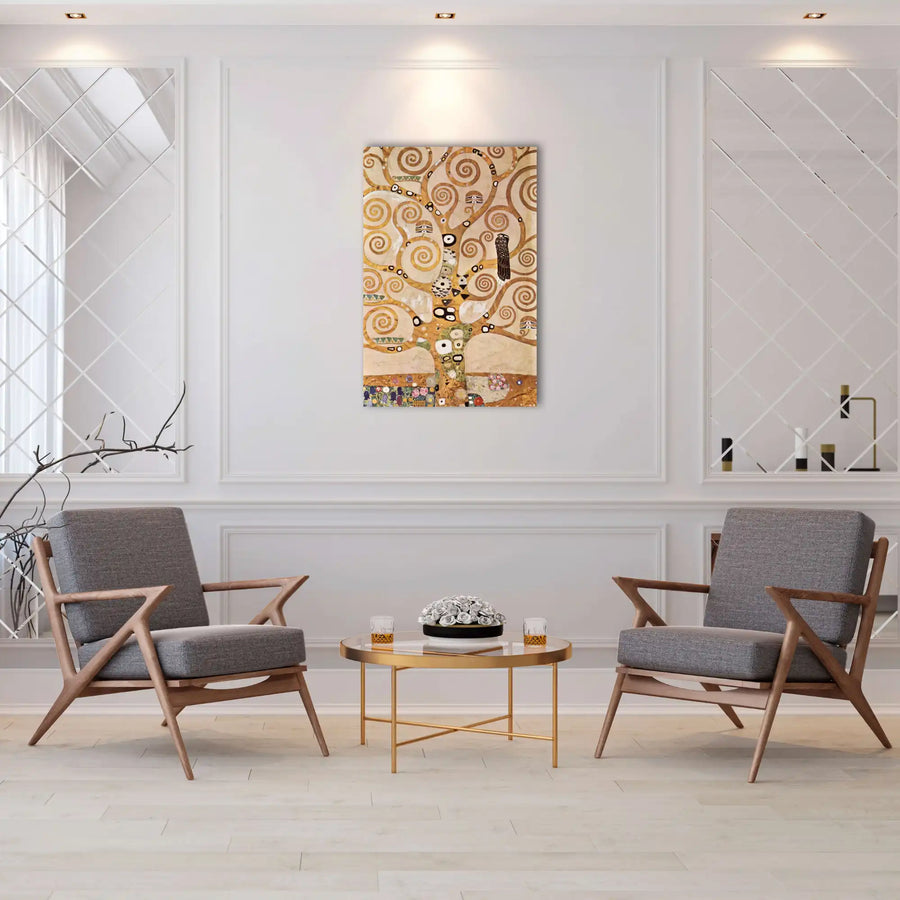
Digital exhibitions such as the Atelier des Lumières can introduce Klimt through scale, music and movement. They are interpretations, however, not substitutes for the objects. Projection can enlarge a detail from The Kiss or a Tree of Life composition, but it cannot reproduce the uneven reflection of metal leaf, the thickness of a support or the distance imposed by an original. Use immersion as an invitation to look again; use a museum encounter to understand the material decisions.
Gold, metal and patterned surfaces
Klimt’s Golden Period relies on real metal, not simply yellow paint. Gold leaf, silver and occasionally platinum create surfaces that respond to changing light. Motifs can flatten a body into ornament, then release a face or hand back into depth. Links with mosaic are visually persuasive, especially after Klimt’s travels to Ravenna, but the paint surface remains deliberately varied. To read this language, compare the hard edges of geometric pattern with the softer organic marks around them. Gold does more than signal luxury: it turns a painting into an object whose appearance shifts as you move.

Klimt among his contemporaries
Klimt worked at the same moment as artists who solved different pictorial problems. Monet used serial observation and changing light; Rodin modelled bodies through mass and tactile surface; younger Viennese artists such as Egon Schiele pushed drawing towards psychological exposure. Klimt’s answer was neither Impressionist spontaneity nor pure linear expression. He preserved precise faces and gestures inside structures that can feel like jewellery, fabric or architecture. The comparison helps us see that turn-of-the-century modernity was not one path but several competing ways of remaking vision.
A legacy built on fruitful contradictions
Klimt’s ornamental geometry can seem to anticipate aspects of Art Deco, but it is safer to speak of a decorative bridge than direct descent. His influence is clearer in the continuing dialogue between fine art, fashion, graphic design and interiors. Reproduction has made the gold imagery globally familiar, while immersive displays have detached it from scale and support. That popularity is not the end of the analysis: Klimt’s modernity lies precisely in the friction between image and object, intimacy and display, seduction and unease.

Klimt matters because the splendour never fully settles the picture. A face can be psychologically present while the surrounding body becomes pattern; gold can evoke devotion, wealth or distance; a tender gesture can remain ambiguous. For a reliable overview of his career and works, continue with the Belvedere’s account of Gustav Klimt. Then return to the paintings slowly: follow the edges where skin meets ornament and ask what the surface reveals—or refuses to reveal.
For a domestic reading of that tension between tenderness and ornament, explore our romantic wall art collection and compare how colour, format and distance alter the mood.