

Which Abstract Artist Inspires You? A Practical Guide
Abstract art shifts attention away from literal description and towards colour, form, rhythm, scale and material. Far from being one universal language with a single origin, abstract art brings together distinct histories and intentions. Learning to see those differences makes the encounter richer—and helps you identify the work that truly holds your attention.
This guide moves from early pioneers to contemporary practices, then turns that history into a practical method: compare how each artist uses colour, repetition, gesture or space; notice what changes when you look for longer; and only then think about the atmosphere you want to create at home.
The Origins of Abstract Art

Abstract art did not begin with one inventor or on one exact date. Wassily Kandinsky developed an influential spiritual and musical theory of colour and form, while Hilma af Klint was already producing large non-objective cycles from 1906. Our discussion of the first abstract artwork explains why the familiar “father of abstraction” formula needs qualification. Piet Mondrian followed another route, progressively reducing landscape and Cubist structure into the asymmetrical grids of Neoplasticism. Their differences matter more than a simple race for priority.
Understanding Abstract Art: Beyond the Visual
A work to extend this line of thought:


Abstract art asks us to describe what the image is doing before demanding that it represent a recognisable subject. Follow the visual weight, edges, repetitions, intervals and changes of colour. Some approaches, such as lyrical abstraction, foreground gesture and atmosphere; geometric abstraction builds tension through measured relationships. Personal response matters, but it becomes more precise when grounded in what is actually visible. Compare these approaches in our abstract wall art collection.
Techniques and Mediums of Abstract Art

Abstract artists work with oil, acrylic, watercolour, ink, collage, found materials and many other processes. Each medium changes the pace and surface of the work: oil extends blending time, acrylic permits rapid layers, watercolour makes transparency and the reserve of the paper central, while mixed media introduces physical interruption and texture. Digital abstraction and installation belong to related contemporary fields, but they should not be treated as interchangeable with painting. The useful question is always how a chosen material serves the work’s visual idea.
Contemporary Abstract Artists to Discover
A work in this chromatic register:

The following artists do not form one school, and several move between abstraction, figuration, sculpture, installation and conceptual art. Read the list as a set of contrasting ways to organise colour, material, repetition and space—not as a fixed ranking.

Mark Rothko
Mark Rothko built large, softly edged colour fields that reward slow viewing. Rather than decoding a motif, notice how scale, layered colour and blurred boundaries change your physical distance from the canvas and make adjacent tones appear to advance or recede.
Yayoi Kusama

Yayoi Kusama uses repetition across painting, sculpture and immersive installation. Her dots and mirrored environments can be visually exuberant, but they also arise from a sustained autobiographical practice concerned with accumulation, self-obliteration and infinity.
Gerhard Richter
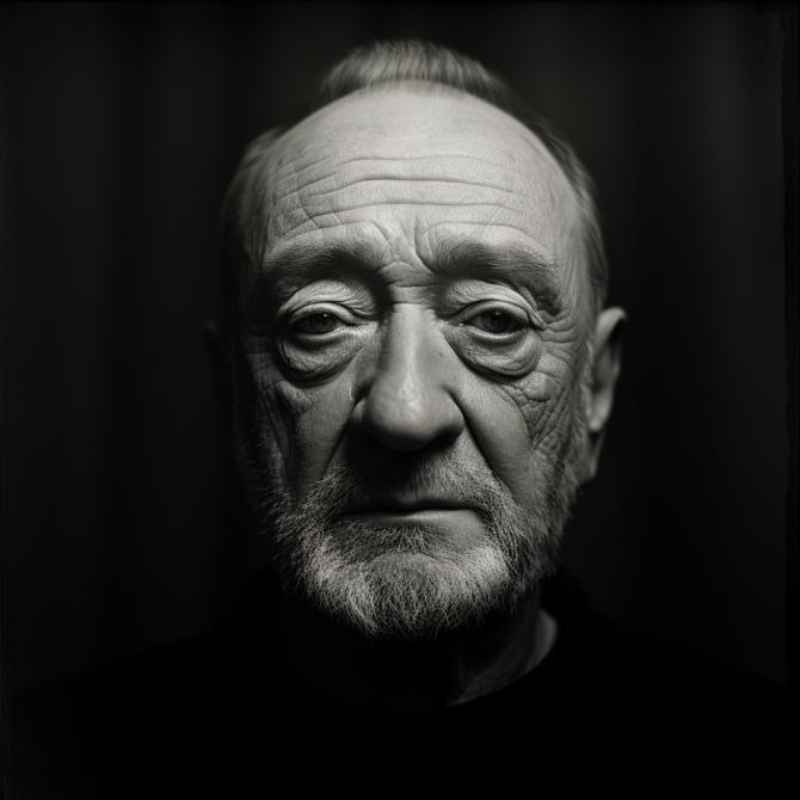
Gerhard Richter continually tests the boundary between abstraction and photographic painting. In his abstract works, scraping, dragging and removing paint make chance visible while remaining subject to repeated decisions; the result resists the idea of one consistent signature style.
Zao Wou-Ki
Zao Wou-Ki, born in Beijing and later based in Paris, brought Chinese calligraphic training into dialogue with post-war European abstraction. Veils, signs and atmospheric depth create spaces that suggest landscape without settling into literal description.
Louise Bourgeois
Louise Bourgeois is primarily associated with sculpture, installation and drawing rather than abstract painting alone. Her work transforms memories of family, sexuality, vulnerability and the body into recurring architectures and forms, showing how abstraction can remain psychologically and materially specific.
Anselm Kiefer
Anselm Kiefer uses dense materials—paint, straw, lead, ash and earth—to confront German history, myth and collective memory. His work often includes legible references and symbolic landscapes, so it is better approached as a tension between material abstraction and historical meaning than as pure non-objective art.
Sol LeWitt
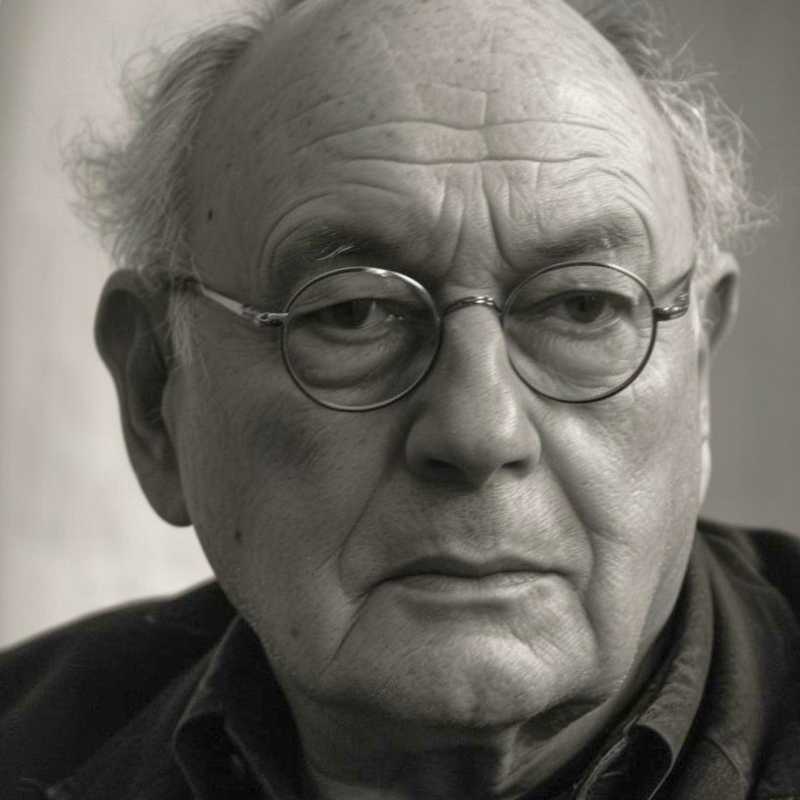
Sol LeWitt made systems and instructions central to conceptual art. His wall drawings may be executed by others according to written directions, separating the work’s idea from one permanent object while still producing precise, often geometric visual experiences.
Lucio Fontana
Lucio Fontana cut and pierced canvases as part of Spatialism. The gesture is not merely destructive: it makes real space, shadow and the wall behind the canvas part of the work, challenging the idea that painting must remain an intact illusionistic surface.
Jean Tinguely
Jean Tinguely built kinetic machines whose movement, noise and occasional dysfunction parody both artistic permanence and industrial efficiency. The work belongs to sculpture and Nouveau Réalisme as much as to abstraction, and is best understood through time and motion rather than a still image.
Hilma af Klint

Hilma af Klint began the large non-objective cycle Paintings for the Temple in 1906, within a spiritualist and theosophical context. Her diagrams, spirals and colour systems complicate any single-origin history of abstraction; they should be understood on their own terms, not merely as a preview of later male artists.
Taken together, these practices show why “abstract artist” is a starting point rather than a complete label. Compare whether you respond most strongly to chromatic immersion, repeated motifs, material density, conceptual systems or real movement. That preference is more useful than choosing an artist by fame alone.
The Impact of Abstract Art on Modern Design
A work that translates this chromatic thinking into an interior:


Abstraction also shaped graphic design, textiles, fashion and interiors through rhythm, asymmetry, cropping and geometric form. At home, an abstract work can organise a wall without dictating a narrative. Start with scale and visual weight: a large active composition needs breathing room, while a quiet geometric work can bring order to a busy setting. Echo one colour already present or introduce one controlled contrast; avoid matching every shade so precisely that the work disappears into the décor.
Investing in Abstract Art: Tips and Advice

Buying abstract art can be rewarding, but no artwork should be presented as a guaranteed investment. If financial value matters, seek independent professional advice and verify authorship, provenance, condition, edition details and all transaction costs. For most first purchases, begin with sustained visual interest and transparent documentation:
- Research the work and its context: compare the artist’s practice, date, medium and exhibition history rather than relying on a decorative label.
- See works in person when possible: scale, surface and colour are difficult to judge accurately on a screen.
- Choose for lasting attention: return to the image several times and notice whether your response deepens beyond the first impact.
- Check the practical details: confirm dimensions, materials, condition, framing or mounting requirements, delivery terms and return policy.
How to Choose the Right Abstract Artwork?

Photograph the wall in daylight, measure the available area and mark the proposed dimensions with removable tape. Then compare the work’s dominant values, temperature and level of movement with the furniture and textiles already present. Ask a specialist when authenticity or conservation is relevant, but keep the final visual decision grounded in how the work behaves in your actual room.
Abstract Art in Digital Space
Digital tools have changed both how abstract art is made and how it is encountered. Online collections, social platforms and virtual museum tours broaden access, while software, projection and generative systems create forms that may have no physical canvas. Screens remain imperfect for judging scale, texture and colour, so use online viewing as a first orientation rather than a complete substitute for the work.

The most useful question is not “Who is the ideal abstract artist?” in the absolute, but which visual problem keeps drawing you back. Rothko slows colour down; Kusama turns repetition into environment; Richter makes revision visible; LeWitt separates idea from execution; Hilma af Klint builds a symbolic system. Use those differences to sharpen your eye, then choose a work whose scale, material and rhythm continue to reward attention in your own space.