Three approaches to designer wall art
The selection brings together very different compositions. Compare balanced circles, warm abstraction and a denser optical effect before choosing the rhythm of your room.
Graphic balance: circles and lines
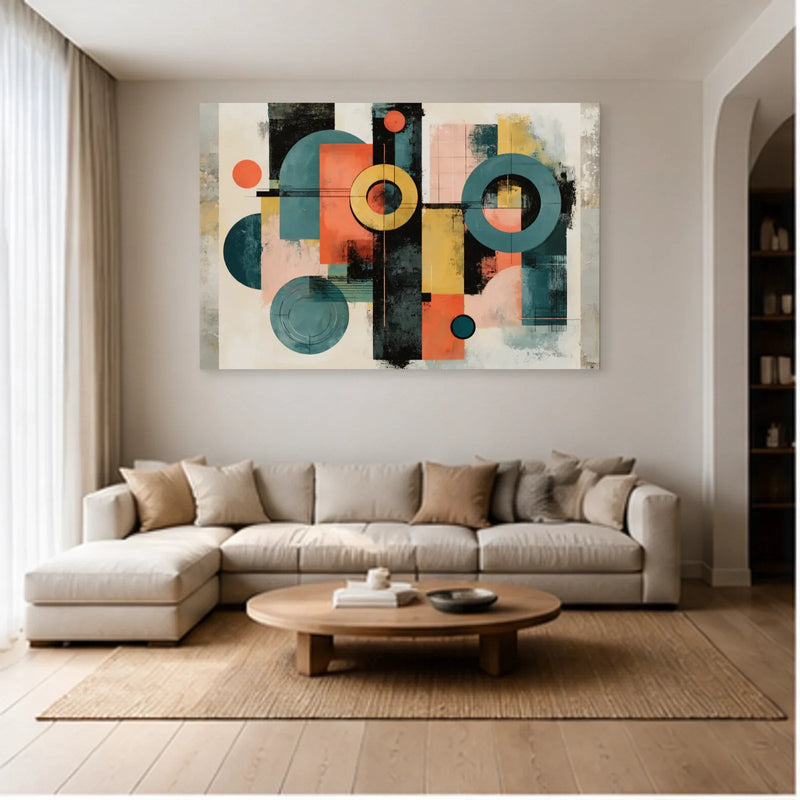
Blue-green discs and black rectangles cross on a pale ground, with orange accents. This horizontal design can connect several colours already present in a living room; plain cushions keep its shapes readable.
View this canvas print ↗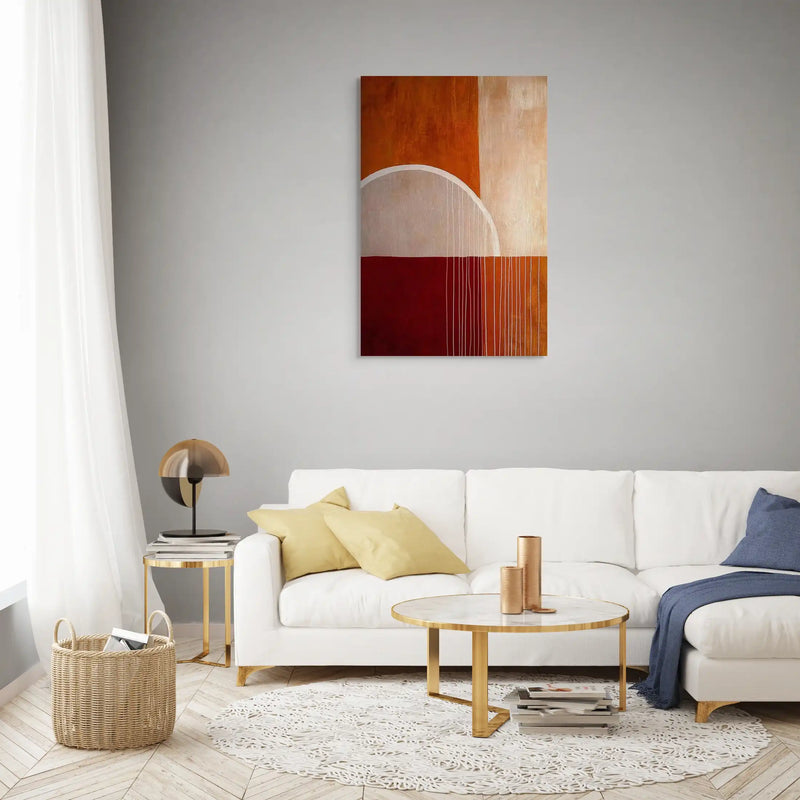
Terracotta design: warm colour fields
A broad light curve connects rust, beige and dark red areas. The vertical format occupies a more focused area than a wide horizontal print. Check its balance above a low piece of furniture.
View this canvas print ↗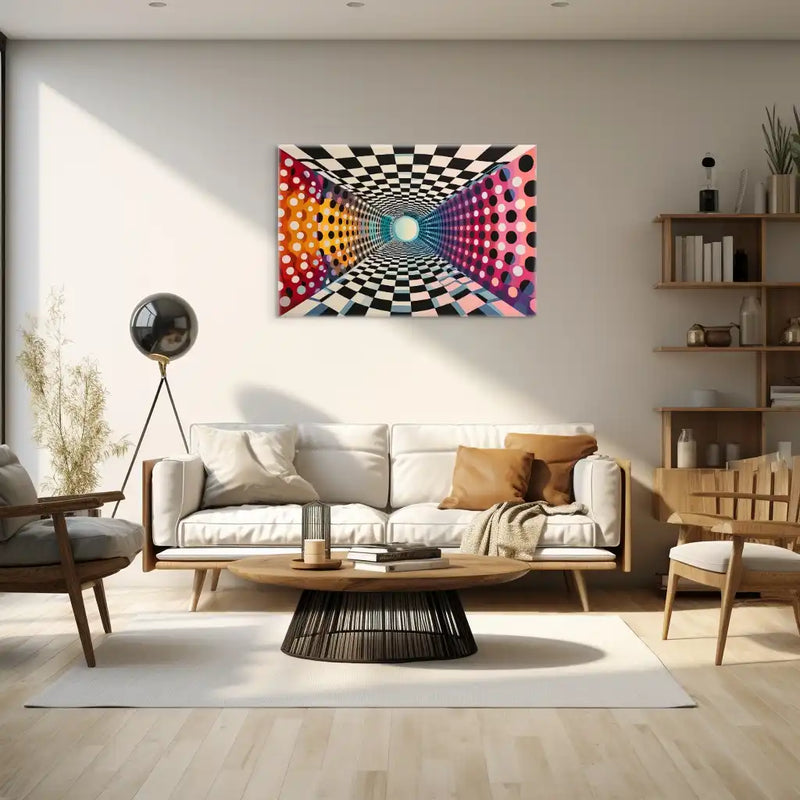
Op Art: an engaging perspective
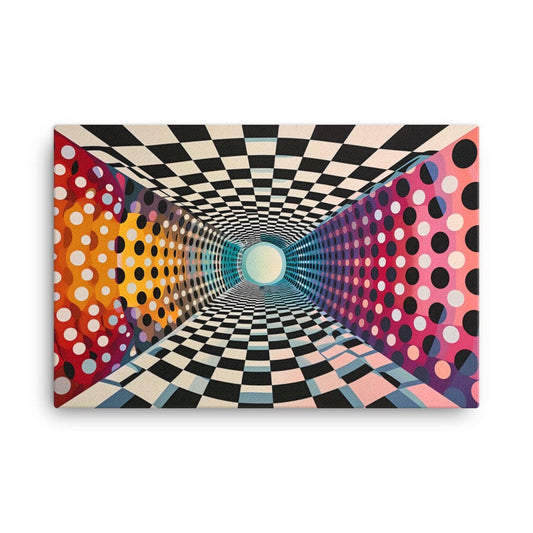
A checkerboard and colourful patterns suggest a tunnel. This dense design readily becomes a focal point. View it from your usual seat to judge the optical effect and contrast.
View this canvas print ↗Choose by shape, not just a label
Here design describes a graphic approach to decoration: curves, lines, repetition and colour relationships. These works do not all belong to one art movement. Notice whether a curve, symmetry, blocks or perspective organises each image.
Connect the print to furniture
Straight furniture can echo a geometric composition, while a curve adds variation. Repeat one or two colours from the image rather than matching everything. On a busy wall, favour larger quiet areas; in a restrained room, a denser design may provide the focal point.
Judge pattern strength from a distance
Small optical details and broad abstract areas do not read the same way. Compare outline and contrast first, then represented texture. Apparent relief or metal in the design remains part of a printed image; consult the product page for actual finish.
The canvas print you receive
The image is reproduced as a print on canvas. Any brushstroke or texture effect visible in the image is part of the printed design.
The textured canvas has a matte finish and is stretched over a wooden stretcher frame. The edges are printed and hanging hardware is included. The stretcher supports the canvas; it is different from an outer decorative frame.
The estimated delivery date appears on each product page. For details, see our shipping policy and our returns policy.
Your questions about this collection
A restrained or colourful design: how to choose?
Consider the patterns already in the room. Broad areas can suit a busy setting; strong contrast can lead a quiet wall. Secondary colours are often easiest to repeat in accessories.
Is the artwork sold on acrylic glass or in a floating frame?
This collection offers canvas prints. Do not infer finish from a room image: check the individual product page. A wooden stretcher supporting the canvas is different from an outer decorative frame.
Does designer wall art need to be large?
No. A small composition can work beside a chair or in an entryway. The relationship between image, furniture and free wall matters more than size alone.