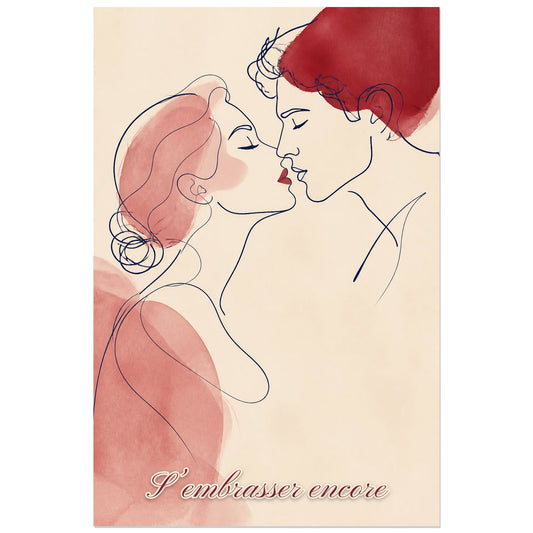
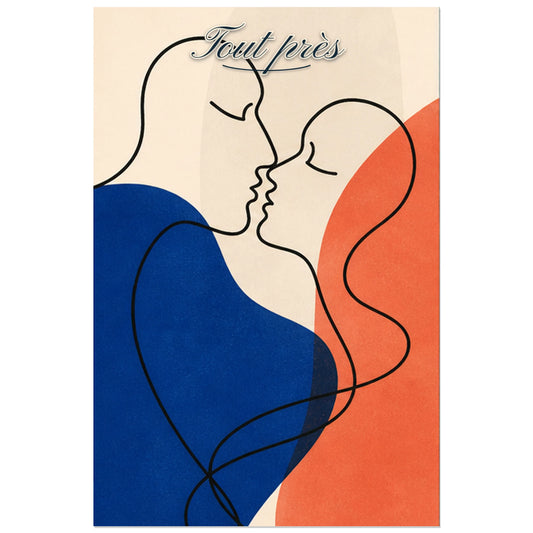
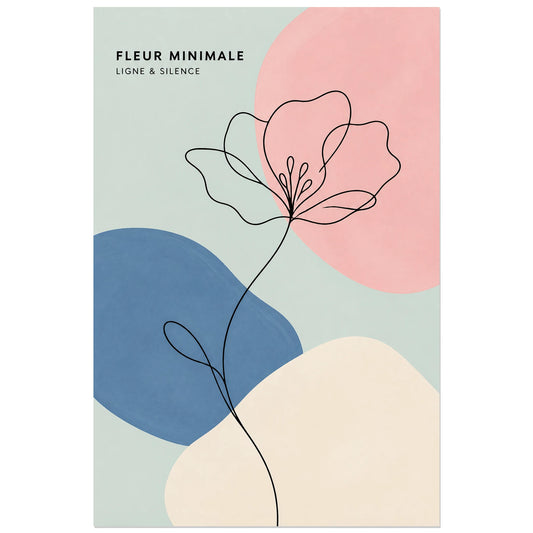
Line drawing reduces a subject to its contour, movement and a few essential details. A continuous line can evoke a face, plant, body or architecture with a simplicity that leaves much to the imagination.
Saying much with a continuous or broken line
The visual field becomes richer when it brings together faces, bodies, hands, plants, animals and objects reduced to their essential contour. A black line on a light ground creates a restrained presence; a touch of colour or irregular stroke introduces more warmth and movement. The treatment is not intended to standardise the subject, but to reveal the sensation that makes it recognisable.
Line drawing favours contour and economy, while minimalism may also use flat colour, photography or typography. This distinction matters as much for decorative choice as for understanding different visual sensibilities.
Using empty space as part of the image
This restraint suits walls already rich in colour as well as minimalist interiors. A black stroke on a light ground brings discreet presence to a bedroom; a coloured or more gestural line enlivens a study. The empty space around the drawing is part of the composition and allows several images to be combined without weighing the whole down. Quality rests on the rightness of the gesture rather than the quantity of information.
When choosing an image around the line-drawing theme, comparing a light interpretation with a more contrasting version helps gauge its real presence. The right option should remain legible from the main route through the room without losing all interest close up.
This lightness suits small rooms and walls already animated. A single work appears more sculptural when it has a generous margin. In a pair, choosing different gestures with the same line weight avoids repetition. A clear, personal intention is preferable to an arrangement made only to follow a passing decorative trend.