




How to Hang a Picture Frame: Complete Guide for Art and Mirrors
Hanging a picture frame comes down to three decisions: choose a convincing proportion, place the centre at a comfortable viewing height and match the fixing to the wall and the actual load. Get those right and a canvas, photograph or mirror feels settled rather than merely attached.
🖼️ Art Made for the Wall
Before measuring, look at the format you want to display. A panoramic canvas, a compact portrait and a large statement piece do not ask for the same amount of breathing room.
Explore the CollectionThis guide takes you from the first pencil mark to the final level check. It covers concrete, plasterboard, brick and timber walls, explains when no-drill systems are appropriate and shows how to plan a gallery wall without turning the room into a visual grid.
The Two-Thirds Rule: A Useful Starting Point
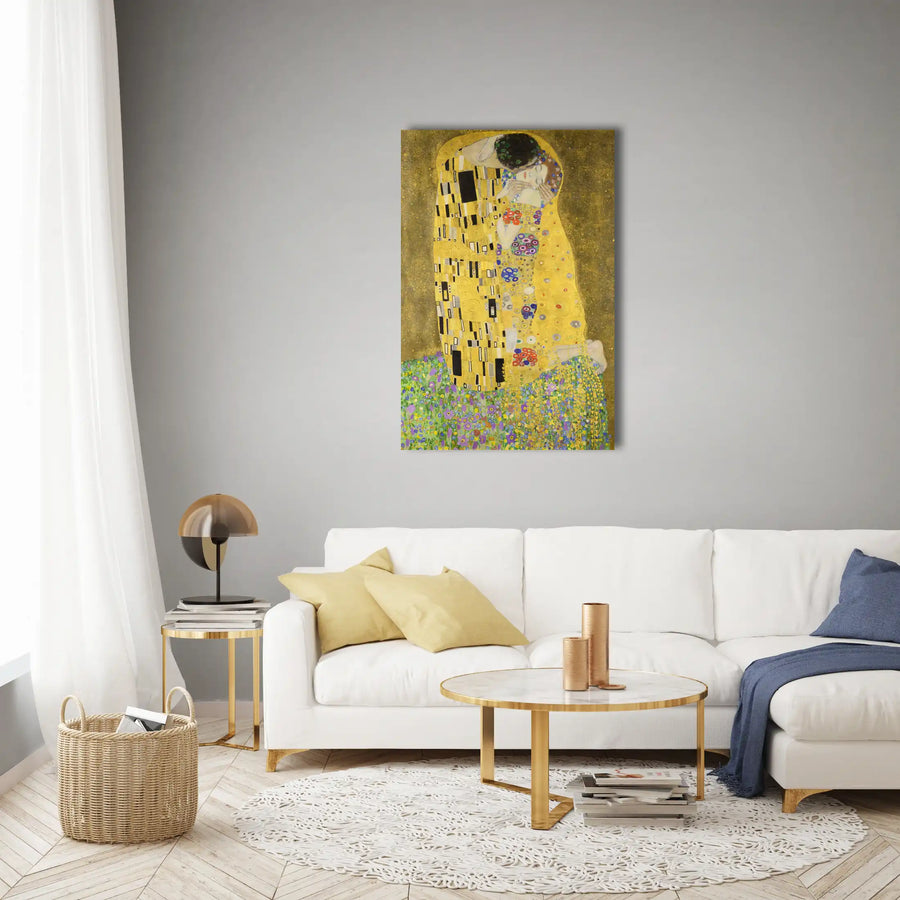
The two-thirds rule is a proportion guide, not a law. Above a sofa, console or headboard, the artwork or group of frames often looks balanced when it occupies roughly two-thirds of the furniture width. A 210 cm sofa, for example, can comfortably support a composition around 140 cm wide.
Leave enough space for the artwork to belong to the furniture without appearing to sit on it. Around 15 to 25 cm between the top of a sofa and the bottom of the frame is a practical starting range, but high backs, low ceilings and very tall canvases may call for adjustment.
On an empty wall, work from eye level instead. In many homes, placing the centre of the artwork around 145 to 155 cm from the floor feels natural. Treat that range as a calibration point: the viewers' height, the room's circulation and the artwork's proportions still matter. Our guide to choosing artwork size helps connect those measurements to the wall itself.
What You Need to Hang a Frame
Gather the tools before you begin. A tape measure, pencil, spirit level and detector for studs, pipes and cables prevent most avoidable mistakes. Add a drill and suitable bit only when the wall and fixing require them.
- For light frames: a properly rated picture hook, nail or removable strip may be enough.
- For medium loads: use a screw with an anchor selected for the wall material.
- For heavy frames and mirrors: use hardware rated above the total weight, ideally fixed into sound masonry or structural timber.
Do not estimate the load from the frame size alone. Glass, hardwood and mirrors add weight quickly. Check the manufacturer's rating for every component—wire, D-rings, rail, hook, screw and anchor—and use the lowest rating in that chain as the limit.
Choose the Fixing for Concrete, Plasterboard, Brick or Timber
The right fixing is determined by what lies behind the paint. If you are unsure, inspect an unobtrusive area, use a detector and check the building's construction before drilling.
1. Concrete wall
Concrete usually needs a masonry bit, an appropriate wall plug and a screw of matching diameter. Drill straight, remove the dust and insert the plug fully. Avoid drilling near sockets, switches or known service routes.
2. Plasterboard wall
Whenever possible, fix into a timber or metal stud. Where that is not possible, choose a plasterboard anchor rated for the board thickness and load. Standard plugs intended for solid masonry are not suitable for hollow plasterboard.
3. Hollow brick wall
Hollow brick calls for a fixing designed to expand or bond within a cavity. Drill without hammer action unless the fixing manufacturer says otherwise, as impact can damage the internal webs. Heavy loads may require chemical anchoring or professional installation.
4. Timber wall or mixed partition
A screw driven into sound structural timber provides a reliable hold. Decorative panelling alone may be too thin, so locate the batten or stud behind it. On a mixed wall, confirm which layer is actually carrying the load.
Need a Starting Point for the Wall?
Choose the artwork first, then let its format determine the fixing points and the surrounding space.
Browse Wall ArtHow to Hang a Heavy Frame Safely
For a large glazed frame or mirror, use two fixing points or a continuous hanging rail whenever the hardware allows it. This distributes the load, reduces rotation and makes levelling easier. Measure the distance between the D-rings or rail slots on the back rather than guessing from the outer frame.
- Weigh the complete object and inspect the frame hardware.
- Identify the wall substrate and any studs, pipes or cables.
- Select fixings whose documented working load comfortably exceeds the total weight.
- Mark both points with a level and verify the spacing twice.
- Install the fixings, seat the frame and test stability without pulling it away from the wall.
If the object is very heavy, unusually valuable, positioned above a bed or seating area, or if the wall construction is uncertain, use a professional installer. The cost is modest compared with a failed fixing.
How to Hang a Frame Without Drilling
Removable adhesive strips and hooks can work well on smooth, clean and fully cured surfaces. Respect the stated weight limit, preparation time and removal method. Wallpaper, textured plaster, dusty paint and humid rooms can reduce adhesion or suffer damage when the strip is removed.
- Adhesive strips: discreet and useful for compatible light frames.
- Picture rails: flexible and ideal when you want to rearrange art without new holes.
- Leaning display: a safe option on a console or shelf, provided the frame cannot slip or be knocked over.
Never use a no-drill product for a heavy mirror unless the manufacturer explicitly approves that exact load and surface. When in doubt, a mechanical fixing is the safer choice.
How to Build a Balanced Gallery Wall
A gallery wall feels coherent when one relationship repeats: a shared colour, similar frames, a consistent gap or a clear central axis. It does not need identical formats. In fact, a measured contrast between portrait, landscape and square pieces often gives the arrangement its rhythm.
Lay the works on the floor first, then cut paper templates and tape them to the wall. Start with the largest or most meaningful piece and build outward. Keep roughly 5 to 8 cm between frames for a compact composition, or increase the spacing when the wall is large and the works need more air. See our detailed guide to composing a balanced gallery wall.
- Choose one visual anchor.
- Repeat at least one colour, material or spacing rule.
- Check the complete outline from the normal viewing distance before drilling.
How to Keep Every Frame Straight
A spirit level remains the most dependable tool, but a smartphone level can help with a quick check. Calibrate the phone on a known level surface, remove a thick case if it rocks and measure against a straight edge of the frame.
Frames hung from a single wire may shift over time. Two small clear bumpers on the lower corners protect the wall and reduce movement. For frequently used corridors or stairways, two-point hanging hardware is more stable.
Choosing Art for Each Room
In an entryway, leave enough clearance for doors, coats and passing shoulders. A vertical work can add height to a narrow wall; our guide to choosing art for an entryway or corridor develops the idea.
In a bedroom, place calm compositions where they can be seen without dominating the bed. Above the headboard, use secure mechanical fixings and avoid heavy glazed frames when the substrate is uncertain. Read more about choosing artwork for an adult bedroom.
In the living room, connect the artwork to the main viewing zone. A single generous canvas can anchor the sofa, while a gallery wall can bring together several interests without demanding one monumental piece.
Three Artworks to Consider
The following works illustrate three different hanging problems: a vivid vertical focal point, a richly detailed portrait and a warm horizontal abstract composition.

Pink Flamingo Art Deco Wall Art

Adele Bloch-Bauer I by Gustav Klimt

Terracotta Abstract Wall Art
| Situation | Useful starting point | Check before hanging |
|---|---|---|
| Above furniture | About two-thirds of its width | Clearance and visual connection |
| Empty wall | Centre around 145–155 cm | Viewer height and circulation |
| Gallery wall | Consistent 5–8 cm gaps | Overall outline and focal point |
Frequently Asked Questions
At what height should a picture frame be hung?
On an open wall, place the artwork's centre around average eye level—often 145 to 155 cm from the floor—then adjust for the room and viewers. Above furniture, judge the relationship with the object below rather than applying the number mechanically.
How can I hang a frame without making a hole?
Use a rated removable strip or hook on a compatible, clean surface, or hang from an existing picture rail. Follow the product instructions exactly and keep heavy or glazed frames on mechanical fixings.
Which anchor should I use for a heavy frame?
There is no universal anchor. The choice depends on the load and whether the wall is concrete, solid brick, hollow brick, plasterboard or timber. Use the fixing manufacturer's load table and consult a professional when the substrate is uncertain.
How do I know whether a frame is straight?
Check the top edge with a spirit level, then step back and compare it with reliable architectural lines. A visually straight result can occasionally require a tiny correction when ceilings or furniture are not perfectly level.
What is the two-thirds rule for wall art?
It suggests that art displayed above furniture should span roughly two-thirds of the furniture width. It is a dependable starting proportion, not a strict formula.
| Wall | Typical approach | Main caution |
|---|---|---|
| Concrete | Masonry plug and matching screw | Use the correct drill bit |
| Plasterboard | Stud or rated cavity anchor | Board thickness and load |
| Hollow brick | Purpose-made cavity fixing | Avoid damaging internal webs |
| Timber | Screw into sound structural wood | Do not rely on thin panelling |
Continue Exploring
If the frame is ready but the artwork is not, begin with our guide to choosing abstract art, then explore bedroom wall art or living room wall art.
For a broader view, read our interior decoration guide, discover five approaches to abstract art or create a quieter atmosphere with Zen-inspired wall decor.