


Art Nouveau: The Defining Movement of the Late 19th Century
Imagine a world where metro entrances look like exotic flowers, where building facades ripple like waves, and where every everyday object is a genuine work of art. Welcome to the fascinating universe of Art Nouveau, the artistic movement that blew a breath of fresh air across Europe at the end of the 19th century!

Art Nouveau: An Aesthetic Revolution During the Belle Époque

Born in the 1890s, Art Nouveau is like a rebellious teenager who decides to shake up the artistic conventions of their era. Out with straight lines and rigid symmetry — in with sensuous curves, exuberant floral motifs, and vibrant colors! It is a genuine visual fireworks display exploding across the streets of Paris, Brussels, Vienna, and Barcelona.
But make no mistake: Art Nouveau is not merely a passing fashion. It is a genuine artistic philosophy that seeks to bring art into every aspect of daily life. As Émile Gallé, one of the masters of the movement, proclaimed: "Art for all, and art in everything!" This revolutionary approach broke down the barriers between the fine arts and the decorative arts, transforming our relationship with everyday aesthetics.
 Gustav Klimt Paintings - Canvases and Reproductions
Historical Context: Art Nouveau, Child of the Belle Époque
At the end of the 19th century, Art Nouveau reasserted creative freedom and the rejection of classical conventions, characteristic of Romantic art. It emerged in a very particular context. The Belle Époque was in full swing — a period of optimism and technological progress. But it was also a time of reaction against runaway industrialization. The artists of Art Nouveau sought to reintroduce beauty and craftsmanship into an increasingly mechanized world.
Contrary to what is sometimes assumed, Art Nouveau is not the precursor of Art Deco. They are two distinct movements with very different aesthetics. Where Art Nouveau favors organic, fluid forms, Art Deco — which succeeded it in the 1920s — is characterized by geometric forms and clean lines.
The Masters of Art Nouveau: Artists of Many Talents

Art Nouveau gave rise to versatile artists, true polymaths who left their mark on their era:
- Hector Guimard: The French architect who gave the famous "noodle style" its prestige with his celebrated Parisian metro entrances. These entrances, true urban sculptures, became emblematic of Belle Époque Paris. Guimard didn't stop at the metro: his Castel Béranger, a residential building in the 16th arrondissement, is a genuine architectural manifesto of Art Nouveau.
- Émile Gallé: The master glassmaker of the École de Nancy, whose vases with natural motifs seem to have captured the very essence of flowers and insects. Gallé was also a passionate botanist, which explains the almost scientific precision of his floral representations. His multi-layered glass technique allowed him to create astonishing effects of depth and transparency.
- Alphonse Mucha: The Czech painter who elevated the advertising poster to a fine art. His representations of women with long, flowing hair defined the Art Nouveau aesthetic in the graphic arts. Mucha was not limited to posters: he also created jewelry, furniture, and even theatrical sets.
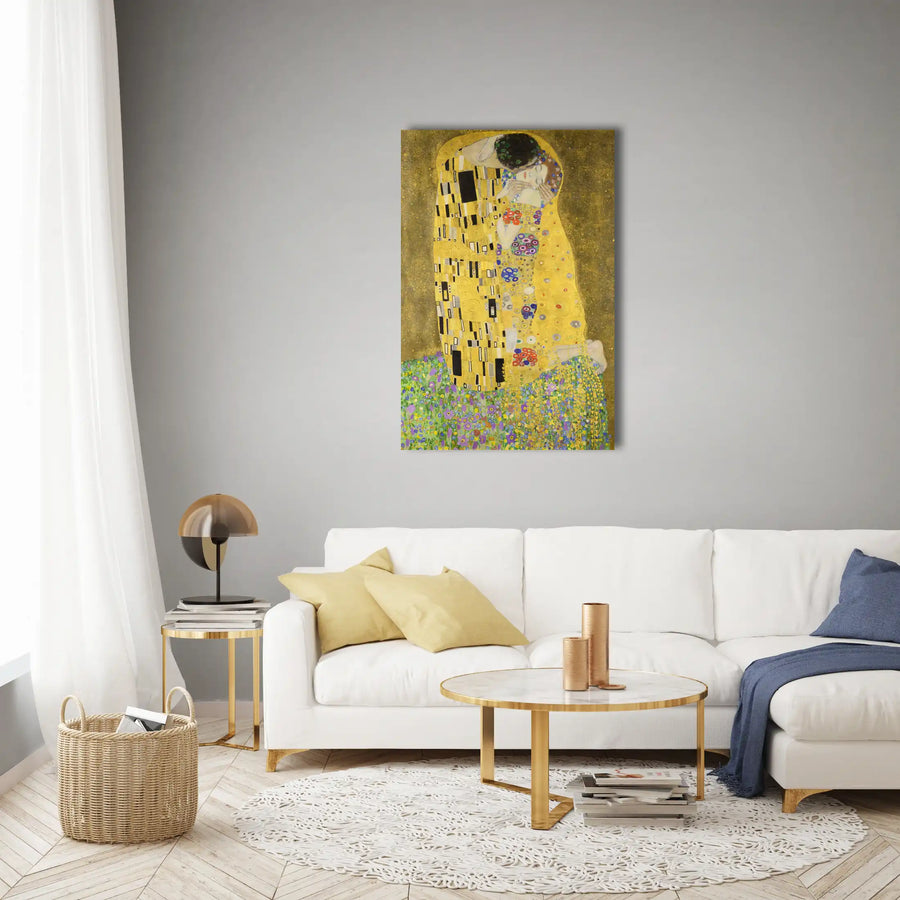
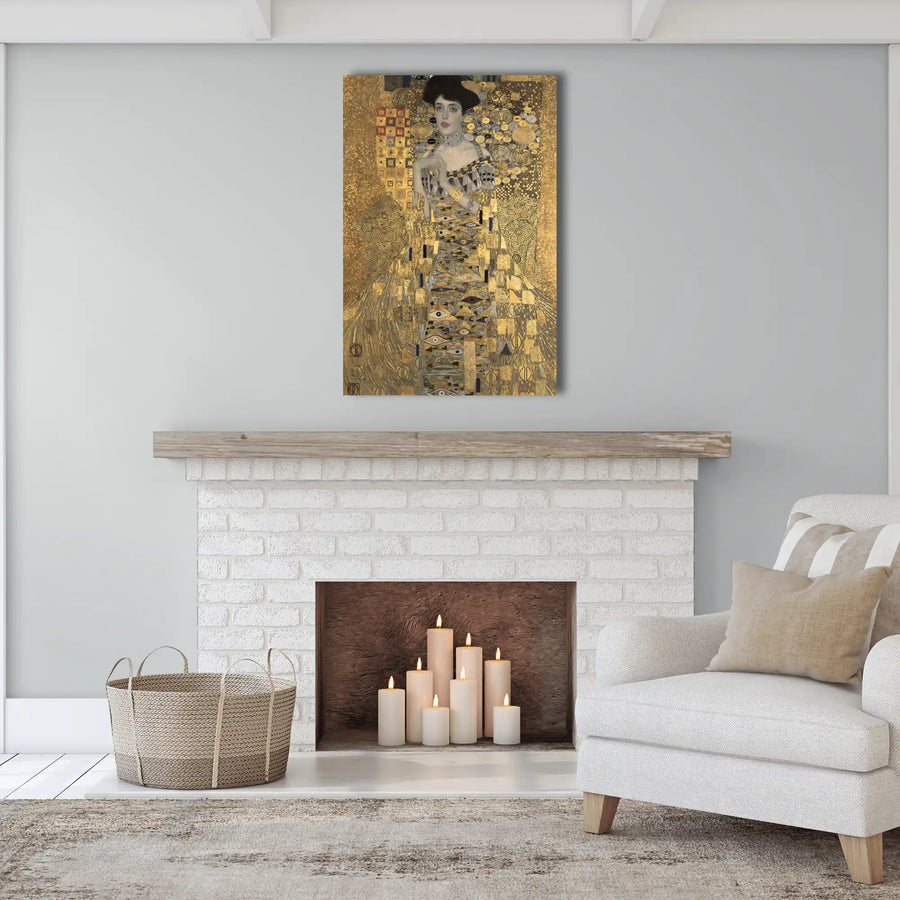
- Gustav Klimt: The Austrian painter who made gold a medium in its own right. Klimt is the very embodiment of the Vienna Secession, the Austrian variant of Art Nouveau. His "The Kiss", a true icon of modern art, is the apotheosis of his "golden period." Imagine: lovers entwined, wrapped in a cloak of glittering geometric patterns. It is as though Klimt captured the very essence of love and transformed it into gold! But Klimt was not content merely to paint pretty pictures. His works, often controversial at the time, explored themes such as sexuality and the cycle of life with an audacity that still sparks discussion today.
- Antoni Gaudí: The Catalan architect who transformed Barcelona into a genuine open-air museum of Art Nouveau. His Sagrada Família, still under construction, and Park Güell are breathtaking examples of an organic architecture that seems to defy the laws of physics.
Art Nouveau in All Its Forms: An Explosion of Creativity

Art Nouveau was not content merely to revolutionize painting or architecture. It infiltrated every aspect of daily life, transforming the most mundane objects into genuine works of art:
- Architecture: Buildings with undulating facades, adorned with intricate ironwork and colorful stained glass. Gaudí's Casa Batlló in Barcelona is the perfect example, resembling a fantastic dream more than a mere building.
- Decorative arts: From furniture to lamps to tableware, everything becomes a pretext for artistic expression. Louis Majorelle's furniture seems almost alive, with its sensuous curves and floral inlays. Tiffany lamps, with their stained-glass shades, have become icons of the style.
- Jewelry: René Lalique transformed jewelry into a genuine miniature work of art, brilliantly combining gold, enamel, and precious stones in compositions of extraordinary finesse. His creations frequently drew on nature, with stylized insect and floral motifs.
- Graphic arts: Art Nouveau revolutionized the world of the poster and illustration. The works of Mucha, but also those of Toulouse-Lautrec, transformed advertising into a fully-fledged art form, profoundly influencing the visual culture of the era.
The Legacy of Art Nouveau: A Lasting Influence
Although the Art Nouveau movement was relatively brief (it faded with the onset of World War I), its influence on art and design is considerable and endures to this day:
- It paved the way for a new conception of the decorative arts, breaking down the barriers between "noble" art and applied arts. This idea of a "total art" profoundly influenced subsequent artistic movements, from the Bauhaus to contemporary design.
- Its organic, fluid aesthetic influenced many artistic currents, from Surrealism to the psychedelic art of the 1960s. Its influence can even be seen in certain works of contemporary street art.
- It laid the groundwork for a reflection on the integration of art into daily life — an idea that remains central to modern design. The notion that every object, from the humblest to the most luxurious, can be both beautiful and functional is a direct legacy of Art Nouveau.
- But be warned: Art Nouveau did not win over everyone! While some were enraptured by those sensuous curves and floral ornaments, others were beginning to find it all a bit... too much. This is how the Bauhaus came into being in 1919, as a kind of artistic detox in response to the decorative excesses of Art Nouveau. Just imagine: where Art Nouveau served up a visual feast worthy of a royal banquet, the Bauhaus offered a detox diet of pure geometric forms and functionality. Walter Gropius, the founder of the Bauhaus, would probably have fainted before an Hector Guimard facade! Yet, as opposed as they may appear, these two movements shared a common goal: rethinking the place of art in daily life. It is fascinating to observe how the history of art swings back and forth between exuberance and minimalism, is it not?
Art Nouveau Today: A Style Still Relevant
Far from being consigned to the dustbin of art history, Art Nouveau continues to fascinate and inspire:
- Art Nouveau buildings are among the most photographed and visited in major European cities. Specialist tourist circuits have developed in Brussels, Barcelona, and Nancy, attracting enthusiasts from around the world.
- Art Nouveau motifs are enjoying a revival of interest in fashion and interior decoration. They can be found on fabrics, wallpapers, and even tattoos! Contemporary designers such as Philippe Starck openly draw on Art Nouveau aesthetics in some of their creations.
- Auction sales of Art Nouveau objects regularly break records, proof of the enduring appeal of this unique style. In 2020, a Gallé vase sold for over €800,000 at Christie's, testament to the persistently high value of these works.
Art Nouveau: Far More Than a Simple Decorative Style

Art Nouveau is not simply one artistic movement among many. It is a genuine aesthetic revolution that changed the way we perceive art and its role in society. By seeking to bring beauty into every aspect of daily life, the artists of Art Nouveau bequeathed us far more than pretty curves and floral motifs: they reminded us that art is not a luxury reserved for an elite, but a necessity that embellishes and enriches all our lives.
As art historian Robert Schmutzler so aptly put it: "Art Nouveau sought to re-enchant a world disenchanted by industrialization." This quest for beauty and harmony in our everyday environment is more relevant than ever in our own era.
To Explore Art Nouveau Further
- Visit the Musée de l'École de Nancy to admire the masterworks of Émile Gallé and his contemporaries. The museum offers themed guided tours that allow visitors to immerse themselves deeply in the world of Art Nouveau.
- Take a trip to Brussels to discover the Art Nouveau houses of Victor Horta — genuine architectural jewels. The Horta Museum, housed in the architect's own home, offers total immersion in the atmosphere of the era.
- Plunge into the enchanting universe of Alphonse Mucha at the Mucha Museum in Prague. In addition to the artist's emblematic works, the museum offers creative workshops to introduce visitors to Art Nouveau techniques.
- For architecture lovers, a trip to Barcelona is essential to discover the extravagant creations of Gaudí. The Casa Milà, nicknamed "La Pedrera," offers nocturnal visits that showcase Gaudí's architectural genius in spectacular fashion.
Reference works:
- Fahr-Becker, Gabriele. "Art Nouveau." H.F. Ullmann, 2015. An essential reference for understanding Art Nouveau in all its geographical and artistic diversity.
- Greenhalgh, Paul. "Art Nouveau 1890–1914." La Renaissance du Livre, 2002. An in-depth analysis of the social and cultural context in which Art Nouveau was born.
- Sembach, Klaus-Jürgen. "Art Nouveau: The Utopia of Reconciliation." Taschen, 2013. A richly illustrated work exploring the different expressions of Art Nouveau across Europe.
Academic articles:
- Silverman, Debora L. "Art Nouveau in Fin-de-Siècle France: Politics, Psychology, and Style." University of California Press, 1992. A fascinating study of the political and psychological implications of Art Nouveau in France.
- Escritt, Stephen. "Art Nouveau." Phaidon Press, 2000. A comprehensive overview of the movement, from its origins to its influence on contemporary art.
Art Nouveau has not finished surprising and delighting us. So, are you ready to be swept away by this wave of beauty and creativity? Who knows, perhaps this dive into Art Nouveau will inspire you to bring a touch of its timeless elegance into your own home!