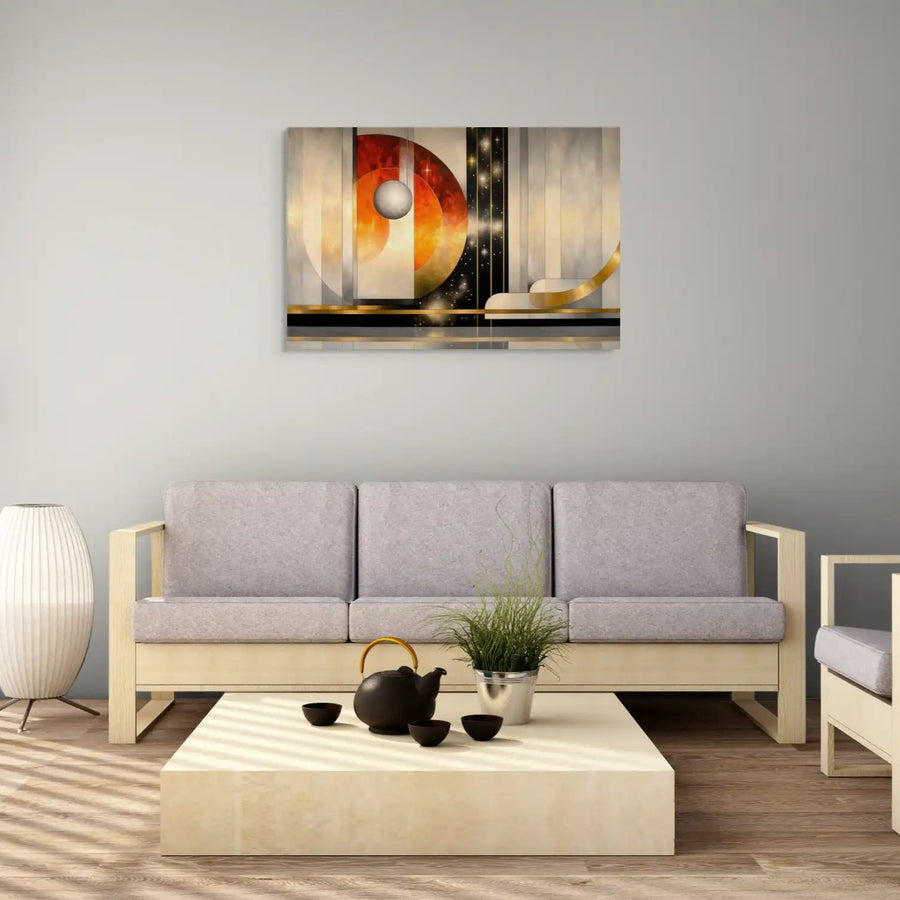
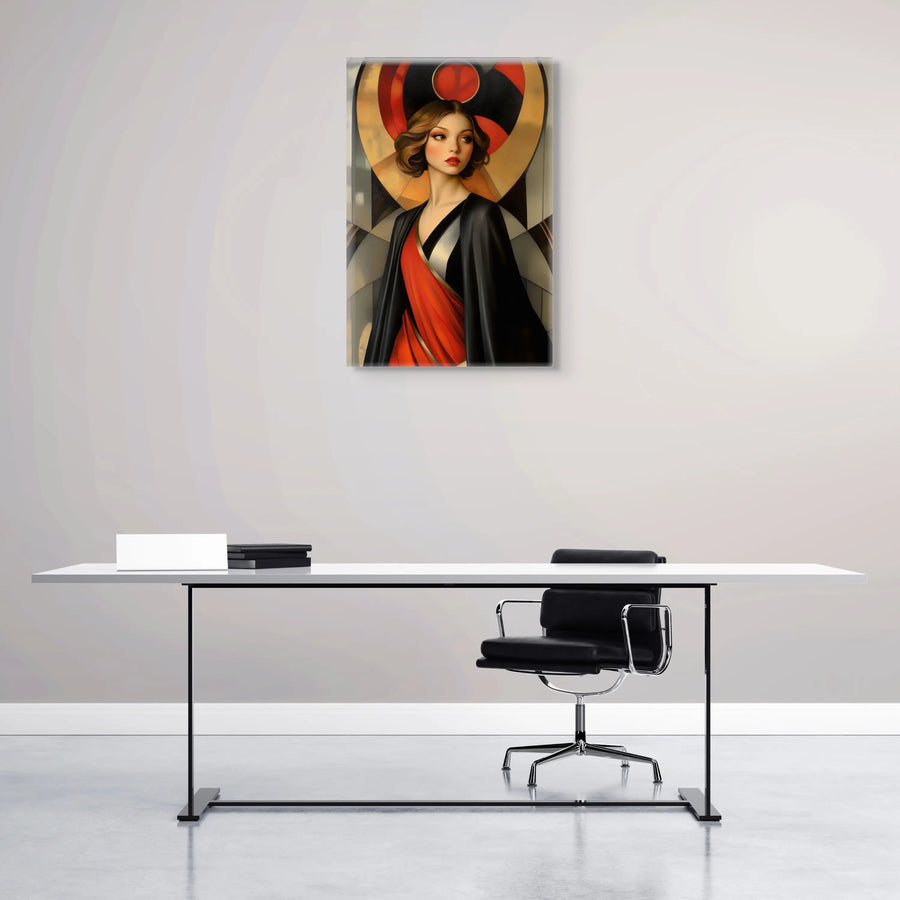
At the heart of the Art Deco style, one finds a deep admiration for geometric principles, symmetry, and a characteristic rejection of right angles. These foundations are not mere aesthetic whims; they represent a search for purity, balance, and harmony in architecture and design. Art Deco buildings, recognizable by their bold facades and imposing silhouettes, perfectly illustrate this tendency to simplify forms in order to give them unrivaled visual power and clarity. The facades are often rhythmed by sequences of ribbon windows or linear ornamentation, emphasizing the verticality and modernity of the structures.
The use of noble materials such as mahogany, ebony, and rosewood is another hallmark of the Art Deco style in the domain of furniture. These wood species, prized for their natural elegance and durability, were often combined with lacquered finishes or refined marquetry techniques, producing pieces of furniture that were as much objects of art as functional items. Lacquer, with its mirror-like sheen, added a dimension of luxury and sophistication, reflecting an era fascinated by exoticism and innovation.

Ornamentation, though more restrained than in Art Nouveau, still held a central place in Art Deco. Decorative motifs, whether geometric or nature-inspired, were stylized and simplified, conveying a modern vision of beauty. These motifs were found not only in furniture but also in interior décor, ceramics, stained glass, and even architectural elements such as reliefs and ironwork. The choice of motifs — whether angular forms, spirals, or stylized representations of the natural world — was guided by a desire for harmony and visual rhythm, contributing to the distinctive identity of the Art Deco space.
Art Deco therefore celebrates a marriage between functionality and aesthetics, in which every detail — from the structure of a building to the finish of a piece of furniture — is conceived with a concern for coherence and beauty. This alliance of geometric rigor, noble materials, and rich ornamentation makes Art Deco a timeless style that continues to inspire contemporary creators and designers.
International Spread and Cross-Influence

Art Deco did not merely illuminate Europe with its splendor; it left an indelible mark on the entire world, becoming a universal language of modernity and elegance. Its international spread was facilitated by events of worldwide significance, such as the International Exhibition of Modern Decorative and Industrial Arts in Paris, which not only marked the official starting point of the movement but also served as a springboard for its recognition on a global scale.
The influence of Art Deco on the modern movement, the Bauhaus, and the International Style is significant. By integrating functional elements and favoring geometric forms and industrial materials, Art Deco opened the way to a new manner of conceiving space and form, profoundly influencing these movements. The Bauhaus, with its radical approach to art, design, and architecture, shared with Art Deco a fascination for the simplification of forms and the innovative use of modern materials, though in a more advanced pursuit of functionality.
In Miami Beach, Art Deco found fertile ground to flourish in the 1930s, giving birth to the Art Deco District, where pastel-colored hotels with nautical motifs evoke the golden age of this aesthetic. The facades are adorned with stylized reliefs, neon lights, and motifs inspired by the era of transatlantic ocean liners, making this neighborhood an open book on the history of Art Deco.

The Chrysler Building in New York is another iconic example of Art Deco's worldwide influence. With its celebrated stainless steel spire, its terracotta Chrysler radiator cap motifs, and its majestically decorated entrance hall of marbles and precious woods, it embodies the perfect fusion of Art Deco's aesthetic refinement and American industrial power.
These examples show that Art Deco, far more than a decorative style, became a symbol of modernity and innovation across the world. From Paris to New York, by way of Miami and beyond, Art Deco transcended borders, influencing generations of creators and leaving behind a lasting legacy that continues to inspire and astonish.
Architects, Designers, and Essential Works

Art Deco is inseparable from the remarkable talents who brought the movement to life. Among these leading figures, Robert Mallet-Stevens and Louis Majorelle stand out for their invaluable contribution to architecture and furniture design. Mallet-Stevens, with his refined and functional constructions, embodied the Art Deco ideal in architecture, favoring clear geometric forms and an innovative use of space. Majorelle, meanwhile, known for his affinity for blue, brought an organic and luxurious dimension to Art Deco through his work on furniture, using precious woods and metal inlays to create pieces of exceptional beauty and elegance.
Among the iconic artists of Art Deco, Tamara de Lempicka stands out for her bold and sensual portraits. Dubbed "the baroness with the paintbrush," she was able to capture the very essence of this movement in her works, blending elegance and modernity with incomparable mastery.

The iconic Art Deco works are not limited to architecture and furniture; they also extend to decorative art objects such as vases, light fixtures, and elements in gilded metal. These objects, often characterized by stylized motifs and clean lines, served as vehicles for the aesthetic principles of Art Deco, emphasizing sophistication and modernity. Art Deco vases, with their bold forms and enameled decorations, reflect the era's taste for exoticism and abstraction. Light fixtures, for their part, combine functionality with sculptural beauty, illuminating interiors with a light that underscores the majesty of the spaces.
Department stores, private mansions, and decorative art galleries played a crucial role in the dissemination of Art Deco, serving as showcases for the movement. Department stores, such as the Galeries Lafayette in Paris, adopted Art Deco not only in their architecture but also in the presentation of their products, offering customers an immersive experience in the world of modernity and luxury. Private mansions, with their sumptuously decorated interiors and imposing facades, reflected the social status of their owners while serving as laboratories for innovations in design and decoration. Decorative art galleries, finally, contributed to legitimizing Art Deco as a major artistic movement, by exhibiting the works of the greatest creators of the era and facilitating their acquisition by collectors and art lovers.
These key figures and works of Art Deco bear witness to the richness and diversity of the movement, underscoring its importance in the history of art and architecture of the 20th century. By celebrating the beauty of functionality and the elegance of simplicity, Art Deco continues to inspire and enchant, demonstrating that art and design can together elevate our everyday environment.
Art Deco in the 21st Century

Art Deco is not confined to a bygone historical period; its legacy continues to resonate powerfully in the 21st century, proving its relevance and adaptability to the evolution of tastes and technologies. Modern architecture, contemporary furnishings, and interior decoration still bear the traces of this movement, integrating its fundamental aesthetic principles while adapting them to new contexts and needs.
In contemporary architecture, the influence of Art Deco manifests through the use of refined geometric motifs, the symmetry of forms, and the use of luxurious materials. Many recent buildings borrow from Art Deco its grandeur and attention to detail, while integrating advanced construction technologies and ecological concerns. These modern structures pay homage to the spirit of Art Deco while transposing it into the architectural language of the 21st century.
In the field of furnishings and interior decoration, Art Deco inspires creations that combine beauty and functionality, favoring clean lines, bold forms, and the use of noble or innovative materials. Contemporary Art Deco furniture, often characterized by lacquered finishes, metal inlays, and luxurious fabrics, finds its place equally in minimalist interiors and more eclectic spaces, bringing a touch of elegance and sophistication.
The influence of Art Deco extends far beyond the domain of art and architecture to permeate popular culture. Films like The Great Gatsby, with their sumptuous recreations of 1920s opulence, television series, and video games that recreate visual universes inspired by this period — Art Deco fascinates and inspires. Fashion and graphic design also draw from its repertoire of motifs and styles, testifying to the movement's capacity to reinvent itself and remain relevant across the ages.
Scandinavian Art Deco, with its more refined approach and emphasis on functionality, perfectly illustrates how the principles of Art Deco can be adapted and reinterpreted in different cultural and aesthetic contexts. This blend of influences underscores the flexibility and universality of Art Deco — a style that, far from being frozen in the past, continues to evolve and adapt to the challenges and opportunities of the present.
Ultimately, the legacy of Art Deco in the 21st century resides in its capacity to inspire innovation and creativity, offering an inexhaustible source of ideas for contemporary creators wishing to wed historical aesthetics with a modern vision. Its continuing influence on our visual and cultural environment attests to the power and permanence of this emblematic artistic movement.

Viewed through the prism of time, Art Deco has asserted itself not only as a witness to a bygone era but also as an inexhaustible source of inspiration for present and future generations. From its beginnings in the Roaring Twenties to its influence on the aesthetic landscape of the 21st century, Art Deco reminds us of the power of innovation and elegance. Its design principles, its characteristic motifs, and its flair for luxury and modernity continue to enchant — from architecture to everyday objects, through digital media and fashion. Art Deco, more than a mere style, has become a universal language of beauty and innovation, proving that art, in its purest essence, transcends time and space, resonating with the aspirations and dreams of every era.